Tools for Remote Work That Keep Nomads Fit and Rested
By: Evgeny Padezhnov
A digital nomad changes cities faster than most people change gym memberships. Every move resets the kitchen, the bed, the daylight, and the gym access. The problem is rarely discipline. The problem is variance.
Health advice assumes a fixed environment. Cook at home, hit the same gym, sleep in the same bed. A nomad loses all three every few weeks. Ingredients differ. Cookware is missing. Sleep quality swings with street noise and time zones. Treating this as a willpower failure guarantees discouragement. Treat it as an engineering problem instead.
Treat health as a reliability problem, not a willpower problem
Reliability engineering has one core move: reduce variance and build defaults that survive a bad environment. The same logic works for a nomad's body.
Common mistake: trying to replicate a fixed home routine in a new city. The home routine depended on a specific gym, a stocked fridge, and a familiar bed. None of that travels. What travels is a portable system — a small set of rules that work in a studio in Lisbon or a co-living space in Bali.
Key point: a routine that depends on the environment breaks the moment the environment changes. A routine that depends only on the person survives the move.
Three levers matter: sleep, food, and movement. Each needs a portable default and a way to measure drift. The goal is not perfection in any single city. The goal is low variance across all of them.
Sleep is the first thing travel breaks
Sleep collapses first because it depends most on the environment. A new mattress, unfamiliar street noise, and a shifted time zone all attack the same night. The CDC recommends seven or more hours for adults. Nomads routinely lose an hour to noise and light alone.
Portable defaults fix most of this:
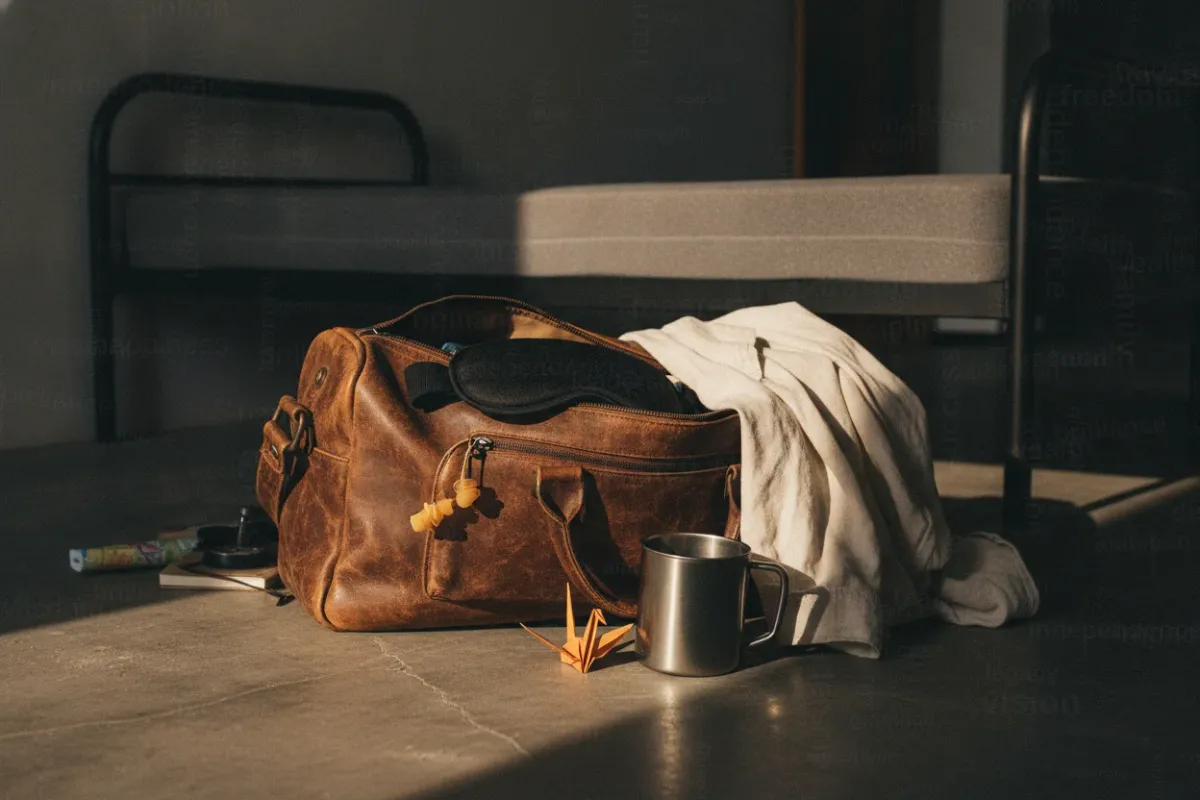
- A sleep mask and foam earplugs weigh under 50 grams. They neutralize the two biggest variables — light and noise — in any room.
- A consistent wake time anchors the circadian rhythm across time zones. Fix the wake time first; bedtime follows within a few days.
- Morning daylight within an hour of waking resets the internal clock faster than any supplement. Step outside, no screen required.
Measurement matters here. A wearable like an Oura ring or an Apple Watch tracks sleep duration and consistency. Free apps such as Sleep Cycle work without hardware. The number to watch is not a single bad night. It is the seven-day average. One rough night in a new city is noise. Five rough nights is a signal to change rooms or block the window.
In plain terms: control light, control noise, fix the wake time, and check the weekly average. That covers most of the damage travel does to sleep.
Food — portable systems beat perfect meals
Ingredient availability is the real obstacle, not motivation. A supermarket in one country stocks a different set of proteins and vegetables than the next. Chasing exact macros across that variation is exhausting and pointless.
Set a floor instead of a target. A floor is three simple rules that hold in any grocery store:
- Hit a protein minimum every day — eggs, yogurt, chicken, lentils, or canned fish are available almost everywhere.
- Add vegetables or fruit to two meals. Frozen counts.
- Anchor hydration with water before coffee and alcohol.
A floor is boring, which is exactly why it survives a bad kitchen. Perfect meals need a stocked pantry and full cookware. A floor needs one pan.
Cookware scarcity has a cheap fix. A single non-stick pan, a knife, and a container handle most cooking. Some nomads carry a compact rice cooker; it doubles as a steamer for vegetables and eggs. Grocery-first beats restaurant-first because a home-cooked floor is cheaper and more consistent than daily restaurant roulette.
Tracking apps earn their place during calibration, not forever. Tools like Cronometer or MacroFactor reveal real intake for a week or two. That calibration teaches portion sizes. After that, most people coast on the learned defaults and only re-track when weight drifts. Tested in production: two weeks of tracking, then intuition — this beats logging every meal for a year and quitting in month two.
Movement without a gym
Gym access is the least reliable variable of all. A nomad cannot count on a squat rack, so the training plan should not require one.
Bodyweight training removes the dependency entirely. Push-ups, squats, lunges, planks, and pull-ups on any bar cover the major movement patterns. The WHO recommends at least 150 minutes of moderate activity per week for adults. That target is reachable in a hotel room.
Two pieces of gear expand the options without adding weight:
- A set of resistance bands weighs about 200 grams and packs flat. Bands add loaded rows, presses, and pull-aparts that bodyweight alone misses.
- A suspension trainer or a doorway pull-up bar covers pulling movements when no bar exists nearby.
Walking is the underrated baseline. A daily step target — many nomads use 8,000 to 10,000 — turns sightseeing into cardio and requires zero equipment. A phone already counts steps, so the tracking is free.
Try it: pick one bodyweight circuit of five exercises. Run it three times a week, anywhere, no gym required. Consistency at low intensity beats a perfect program that only works in one city.
The best tools for remote work protect the routine
Health competes with work for the same hours. A blown deadline eats the gym slot and the cooking time first. This is why the best tools for remote work are also health tools — they compress the workday and defend the margin that training and sleep need.
Three categories matter most:
- Time-blocking and calendar defaults. Blocking a fixed training slot as a recurring calendar event treats the workout like a meeting. What is scheduled survives; what is optional gets skipped.
- Automation for repetitive work. Scripts, templated workflows, and task runners reclaim hours that would otherwise crowd out sleep.
- AI coding assistants. Developers who lean on the best ai tools for coding compress deep-work hours. Six months inside a tuned AI IDE stack shows where the real time savings land — and those saved hours are what fund a gym session or an early night.
Key point: a health routine does not fail because someone is lazy. It fails because work expanded to fill the day. Tools that shrink the work protect everything downstream.
The hidden variable: isolation wrecks health too
Physical metrics miss half the picture. Loneliness degrades sleep, appetite regulation, and motivation to train. A nomad who moves constantly loses the social anchors that a settled person takes for granted. The tools that make relocation logistically easy do nothing for the human side of it — a gap covered in why remote work tools made the move easy but the circle stayed hard.
Practical fixes exist. Co-living and co-working spaces bundle a built-in social layer with the desk. Regular calls with a fixed group of friends create the consistency that new cities cannot. The same tension shows up even for people returning home, as covered in how remote work tools beat the disconnect of moving. Health is not only reps and macros. It is also the people around the desk.
Put it together: the portable stack
The full system fits in a short list. Nothing here depends on a specific city.
- Sleep: mask, earplugs, fixed wake time, morning daylight, weekly average tracked.
- Food: protein floor, vegetables twice a day, one pan, two calibration weeks then coast.
- Movement: five-exercise bodyweight circuit, resistance bands, daily step target.
- Work: time-blocked training slot, automation, AI assistants to reclaim hours.
- Social: co-living or co-working, a fixed remote friend group.
Each item removes a dependency on the environment. That is the whole strategy. Low variance beats high peaks when the location keeps changing.
What to try right now
Pick the sleep lever first, because it compounds into everything else. Buy a sleep mask and earplugs. Set a single fixed wake time and hold it for seven days, including weekends. Step outside within an hour of waking, no phone.
One week of consistent sleep sharpens appetite control and training energy on its own. Build the food floor and the bodyweight circuit on top of that foundation once the wake time is stable. In plain terms: fix the nights first, then the meals and the movement follow with far less effort.
Information is accurate as of the publication date. Terms, prices, and regulations may change — verify with relevant professionals.